2026 • 8(2) • DOI: 10.30542/JCEMS.2026.08.02.03
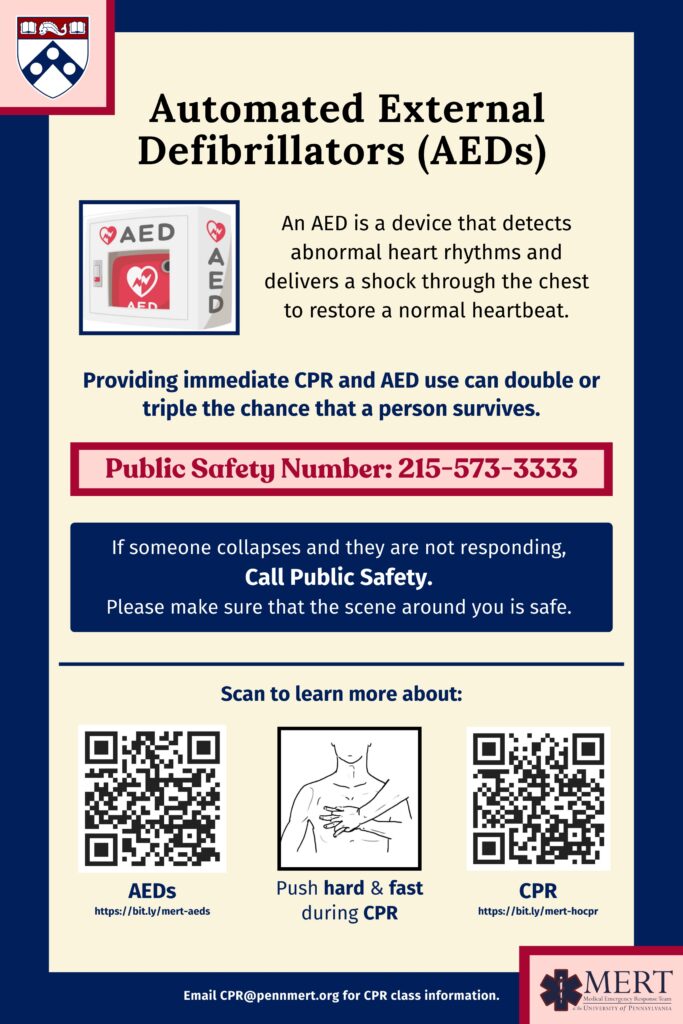
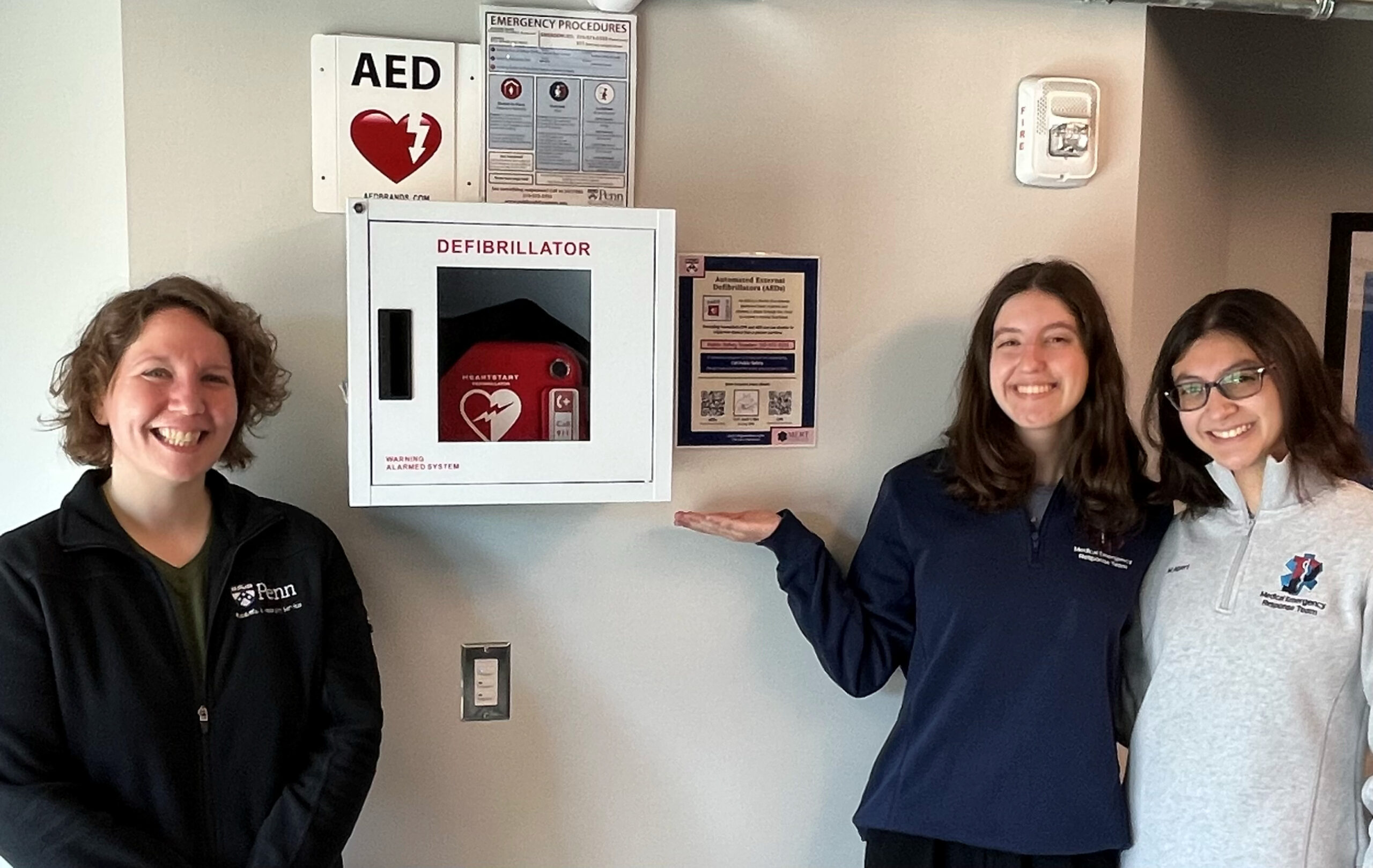
Since the Fall 2025 semester, the University of Pennsylvania has added informational flyers beside every automated external defibrillator (AED) on campus to promote cardiac emergency preparedness and education.
According to the American Heart Association, while most cardiac arrests occur out of hospitals, only 10.2% of patients experiencing out-of-hospital cardiac arrests (OHCA) have an AED applied by a bystander.¹ Studies suggest low levels of AED awareness among lay rescuers, ranging from 19% to 43%. A majority of study respondents were unaware that AEDs are resuscitative tools geared toward use by lay rescuers.² Consequently, OHCA is associated with substantially higher mortality than cardiac arrest occurring in hospitals: nearly 2.5-fold higher in adults and 4-fold higher in children.³
Prior to the introduction of these flyers, the University of Pennsylvania (Penn) had 250 AEDs that lacked contextual information regarding their use. Although AEDs are widely available across campus, many students and faculty are also unaware of the importance of and how to use this life-saving technology. After working as EMTs and caring for patients experiencing cardiac emergencies, former Penn students and Medical Emergency Response Team (MERT) leaders Julia Smolyak (2024 MERT Internal Technology Officer) and Micaela Alpert (2024 MERT Chief) were inspired to address this gap. Smolyak began exploring ways to increase AED awareness on campus, and with support from Alpert and MERT Medical Director Dr. Joshua Glick, the idea developed into a project aimed at improving cardiac emergency preparedness among Penn and West Philadelphia community members. Working alongside Penn’s Division of Public Safety Chief of Fire and Emergency Services Eugene Janda and the Division of Facilities and Real Estate Services (FRES), Smolyak and Alpert put this initiative into action.
Initiative Overview
The initiative involved Smolyak designing educational flyers to be displayed alongside every AED on campus. Each flyer defines what an AED is and underscores its life- saving role in cardiac arrest. The flyer includes two QR codes that link to instructional videos featuring MERT members demonstrating how to apply an AED, along with how and when to initiate CPR measures. This resource offers students and faculty the opportunity to learn more about the relevance of AEDs and how to incorporate them into effective bystander CPR. The videos are intended for use by passersby in non-emergent settings, providing lay rescuers the opportunity to scan the QR code at their convenience, prior to encountering an OHCA. By lowering barriers to understanding and awareness, these flyers and videos could improve confidence among lay rescuers and increase the likelihood of immediate intervention during OHCAs, with the intent of maximizing survival for anyone experiencing cardiac arrest on or near campus.
Development Process
The flyers were designed with clear language, intended to be easy to read and eye-catching in busy campus settings. Drafts underwent careful review by the Division of Public Safety’s Director of Communications, Stacy Ritchey, and Penn’s Office of Risk Management and Insurance’s Associate Vice President, Benjamin Evans, who helped refine the materials into more effective, accessible resources. Smolyak worked with other MERT members to direct and produce the instructional videos, which present clear, approachable demonstrations of CPR and AED use. Penn FRES also provided essential support with logistics and planning, helping to coordinate the placement of flyers and ensuring the initiative could be implemented effectively across all 250 AED sites.
Looking Ahead
The hope is that these flyers and videos prepare students, faculty, and community members for emergencies and inspire confidence and responsibility in the community. As MERT evaluates engagement and impact through analytics and feedback, this initiative can serve as a model for other universities and community organizations nationwide. Ultimately, this effort is an example of how a relatively simple, low-cost intervention may raise awareness of OHCA and highlight the critical role of bystander CPR and AED use in cardiac resuscitation. Future efforts may include the implementation of similar initiatives on other university campuses and outside collegiate settings.
Acknowledgments
The authors would like to thank the University of Pennsylvania’s Medical Emergency Response Team, the University of Pennsylvania’s Division of Public Safety, and the University of Pennsylvania’s Division of Facilities and Real Estate Services. The authors would also like to thank Benjamin Evans and the University of Pennsylvania’s Office of Risk Management for assistance in preparing the flyers. The authors would like to acknowledge the use of artificial intelligence tools for stylistic revisions. All content was reviewed by the authors. The authors declare no conflicts of interest. The authors would also like to thank Mark Kocent and the University of Pennsylvania’s Office of the University Architect for funding the printing and laminating of flyers. The authors declare no conflicts of interest. The authors would also like to thank Mark Kocent and the Office of the University Architect for funding the printing and laminating of flyers.
References
- American Heart Association. (2020). A race against the clock out-of-hospital cardiac arrest. https://www.heart.org/-/media/Files/About-Us/Policy-Research/Fact-Sheets/Acute-Care/Out-of-Hospital-Cardiac-Arrest.pdf
- Brooks SC, Clegg GR, Bray J, et al. Optimizing outcomes after out-of-hospital cardiac arrest with innovative approaches to public-access defibrillation: A scientific statement from the International Liaison Committee on Resuscitation. Resuscitation. 2022;172:204-228. doi:10.1016/j.resuscitation.2021.11.032
- American Heart Association. (2023). Aed fact sheet early defibrillation. https://cpr.heart.org/-/media/CPR-Files/Training-Programs/AED-Implementation/2023-updates/KJ1729_AED_FactSheet.pdf