Abstracts & Posters
Continue to the category
2026 Academic Poster Session
The Journal of Collegiate Emergency Medical Services is proud to showcase the posters accepted for presentation at the 33rd Annual NCEMSF Conference...
Analysis and Standardization of Non-Transport Collegiate EMS Unit Verbal Handoffs to Responding ALS
Download PDF AbstractDownload PosterAuthor and Article Information
Poster Presentation Abstract
2024 Conference Academic Poster Session Posters
Posters from the Academic Poster Session at the 2024 Annual National Collegiate Emergency Medical Services Foundation Conference
Implementation of a Peer Support Program for Campus First Responders
The implementation of Peer Support is one step CUSERT has taken towards improving mental health support for campus first responders.
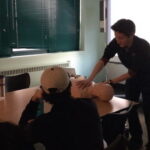
Naloxone Training and Distribution Program in an Urban Collegiate Setting
MERT worked with physicians from Penn Medicine’s Emergency Department to develop a 1-1.5 hour bystander naloxone training curriculum.

The Relative Importance of Vital Signs in Campus-Based Emergency Services
This study examined the vital signs of patients of the University of Texas at Dallas' BLS response team and compared them to established standards of upgrading to ALS.

Assessing the Adequacy of Behavioral Health Training for Collegiate EMTs
This study aimed to assess EMT self-reported preparedness for behavioral emergencies and to compare behavioral call experience to preparedness.
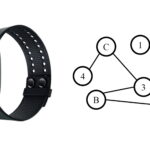
Heart Rate and Heart Rate Variability as Indicators of Stress in Emergency Medicine Residents...
The authors measured stress-induced heart rate and heart rate variability of emergency medicine residents during a pulseless electrical activity cardiac arrest scenario.
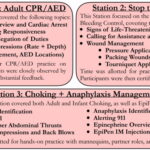
Promoting Youth Emergency Preparedness through Lifesaving Emergency Skill Workshops
Members of Harvard CrimsonEMS expanded outreach to high-school students to create a more medically-literate youth community.
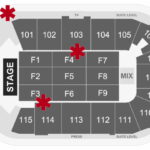
Development of a Mass Gathering Medicine Training Program for Novice Collegiate EMS Providers
New training and protocols have promoted better team dynamics, higher staff confidence, and more efficient patient care.
Reducing Barriers to Bystander Intervention:
Harvard University's Crimson EMS developed a workshop series for students on campus, focusing on CPR and Stop the Bleed training.
Do EMT students enrolled through a college course perform better in terms of course...
Armstrong et al. conducted a retrospective review comparing course completion rates and state-certifying exam scores for college-affiliated and non-college-affiliated students enrolled in an EMT course.
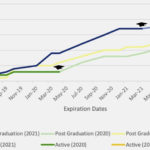
Integrating Continuing Education Credits to a Collegiate EMS Training Model
The University of Pennsylvania Medical Emergency Response Team implemented a program to integrate continuing medical education (CME) credits into their training curriculum.
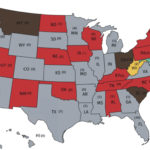
No IV, No Problem: A Cross Sectional Analysis of Antiemetic Therapies in Statewide...
Based on a cross-sectional analysis of statewide EMS protocols in the United States, adoption of BLS protocols for the treatment of nausea remains low.
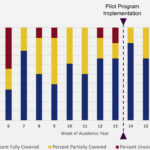
Development of an Excel-Based Software Solution to Collegiate EMS Shift Scheduling & Placement
The University of Pennsylvania Medical Emergency Response Team created a Microsoft Excel-based software system to schedule providers for shift coverage.
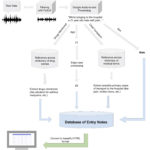
SIREN: Schema In-Fill Rendered from Entry Notifications
Massachusetts Institute of Technology EMS created an end-to-end tool that converts audio files of hospital entry notes into text-based entries in a user-friendly database.
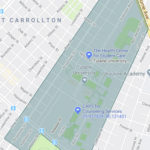
Free of Charge: Analysis of an Urban Collegiate EMS Agency
Herman et al. conducted a retrospective review of itemized billing forms from Tulane EMS. The financial costs saved by students due to the availability of Tulane EMS were estimated.
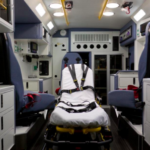
Designing Safety into Ambulances
Massachusetts Institute of Technology EMS designed an innovative new ambulance, incorporating best practices and current evidence to enhance provider safety.
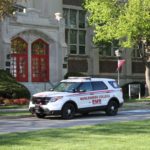
Utilizing a Scramble Crew Approach to Achieve 24-Hour Coverage
In 2016, Muhlenberg College EMS reinstituted daytime response, incorporating Active 911, a digital messaging system, and an all-call, scramble crew model. Since the new response plan began in March of 2016, Muhlenberg College EMS has responded to 47 calls that may have otherwise been ignored, at a response time shorter than that of normal duty crew responses.

Expanding Collegiate EMS Agencies
Expanding EMS agencies face many challenges pertaining to on-scene operations, administrative oversight, and sustainability. Yale EMS (YEMS) faced a $5000 budget deficit, inconsistent training of probationary members, and a high incidence of equipment deficiencies, delayed response times, and unsafe scene conditions. YEMS addressed these concerns using a three-pronged approach tackling Operations, Administration, and Sustainability challenges.
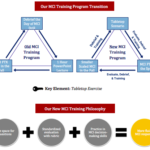
MCI Training Program
In 2010, the University of Pennsylvania Medical Emergency Response Team (MERT) initiated the Mass Casualty Incident (MCI) training program. To better prepare student-EMTs to respond and manage a disaster scene, MERT is implementing a tabletop exercise module to ensure that MERT members are fluent in the Incident Command System (ICS), familiar with the MERT MCI operating guidelines, and able to size-up a scene appropriately.

“Continuing Care” with EC-ERT
EC-ERT created a program called “Continued Care” (CC) to provide a prehospital care resource for patients who required additional time to monitor their condition until care could be terminated. Through its design and implementation, CC reduces non-emergent ALS transports, thus reducing strain on the county EMS system and local emergencies rooms.
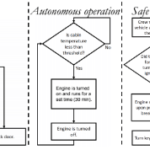
A Low-Cost Ambulance Idle Reduction System
Massachusetts Institute of Technology (MIT) EMS proposes a simple, automated system design that constantly monitors the temperature in the patient compartment, and only starts the vehicle engine and heating system temporarily when the temperature falls below a preset threshold in the cabin. MIT EMS estimates that their system can reduce the vehicle’s idling fuel consumption and engine run time by about 85%.

Implementing Stop the Bleed at Skidmore College
Skidmore College Emergency Medical Services (SCEMS) implemented a Stop to Bleed campaign at Skidmore College. SCEMS organized 20 free bleeding control trainings to train over 60 community members and incorporated $5,000 into the Skidmore Campus Safety 2018 budget for bleeding control equipment.
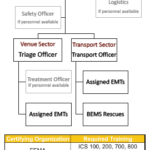
Optimizing Collegiate EMS Resources During Major Events
Brown EMS (BEMS) provides primary medical coverage at Spring Weekend (SWE), an annual outdoor concert drawing 6,000 attendees per day. By increasing its resources to include ground details and an additional ALS ambulance, BEMS aims to increase venue capacity, optimize response, and limit mutual-aid requirements.
Cardiac Health and Stroke Awareness Month (CHASAM)
Massachusetts Institute of Technology (MIT) EMS designed a non-certification learning opportunity for students who have not previously sought out CPR training. MIT EMS’s creation of an annual Cardiac Health and Stroke Awareness Month (CHASAM), piloted in 2016 and repeated in 2017, substantially increased the number of trained bystanders from a diverse selection of residential communities.

Feasibility of Asynchronous Learning in Collegiate EMS
Brown University EMS implemented a novel BLS Supervisor Training Program. Using asynchronous learning, Brown sought to optimize training time by promoting self-learning off-shift and outside of traditional didactic models using small-group, problem-based learning and online modules.
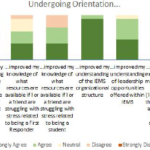
Piloting an Online New Member Orientation Program
Illini EMS created and implemented an online Orientation course for new members. Using a combination of original and adapted videos followed by a quiz, this self-paced program teaches and assesses the basics of topics including bleeding control, organizational structure, team dynamics, and First Responder mental health in under an hour.
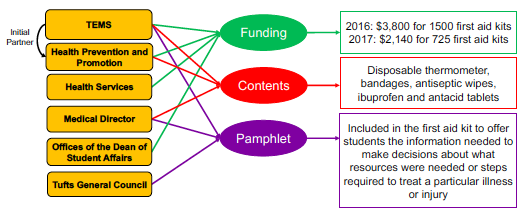
Upstream of EMS Overutilization
Tufts Emergency Medical Services—alongside Tufts Health Promotion and Prevention—funded, created, and distributed first aid kits and informational content to all first-year students.