Peer Review of Collegiate EMS Scholarly Literature
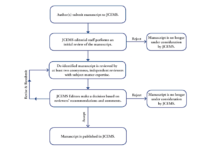
JCEMS employs a double-blind peer review process to filter manuscripts for publication. We believe that the process minimizes bias, promotes fairness, encourages appropriate criticism, and strengthens the quality of submitted manuscripts.

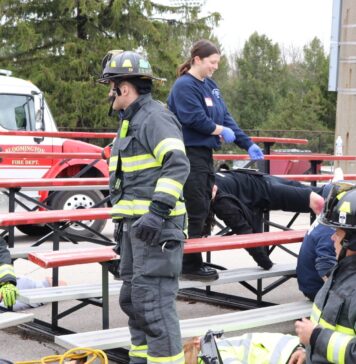
Non-Veterinary Emergency Care of Law Enforcement Canines at Mass Gathering Events
This case report describes the development, implementation, and evaluation of a pilot training course for collegiate EMS providers on the treatment of law enforcement canines.
The JCEMS Research Mentorship Program
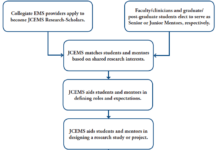
JCEMS developed a Research Mentorship Program to build research capacity in the collegiate EMS community.
Implementation of Stop the Bleed on an Undergraduate College Campus
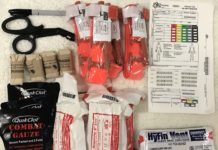
Johns Hopkins Emergency Response Organization (HERO) implemented a training, preparedness, and public access equipment program to stop the bleed on their campus.
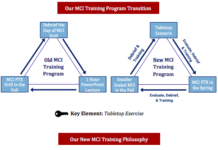
MCI Training Program
In 2010, the University of Pennsylvania Medical Emergency Response Team (MERT) initiated the Mass Casualty Incident (MCI) training program. To better prepare student-EMTs to respond and manage a disaster scene, MERT is implementing a tabletop exercise module to ensure that MERT members are fluent in the Incident Command System (ICS), familiar with the MERT MCI operating guidelines, and able to size-up a scene appropriately.
Implementing Stop the Bleed at Skidmore College
Skidmore College Emergency Medical Services (SCEMS) implemented a Stop to Bleed campaign at Skidmore College. SCEMS organized 20 free bleeding control trainings to train over 60 community members and incorporated $5,000 into the Skidmore Campus Safety 2018 budget for bleeding control equipment.
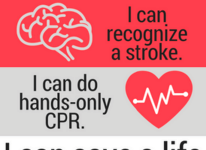
Cardiac Health and Stroke Awareness Month (CHASAM)
Massachusetts Institute of Technology (MIT) EMS designed a non-certification learning opportunity for students who have not previously sought out CPR training. MIT EMS’s creation of an annual Cardiac Health and Stroke Awareness Month (CHASAM), piloted in 2016 and repeated in 2017, substantially increased the number of trained bystanders from a diverse selection of residential communities.
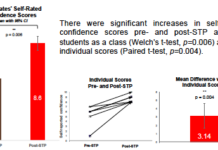
Feasibility of Asynchronous Learning in Collegiate EMS
Brown University EMS implemented a novel BLS Supervisor Training Program. Using asynchronous learning, Brown sought to optimize training time by promoting self-learning off-shift and outside of traditional didactic models using small-group, problem-based learning and online modules.
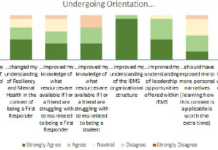
Piloting an Online New Member Orientation Program
Illini EMS created and implemented an online Orientation course for new members. Using a combination of original and adapted videos followed by a quiz, this self-paced program teaches and assesses the basics of topics including bleeding control, organizational structure, team dynamics, and First Responder mental health in under an hour.